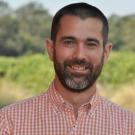
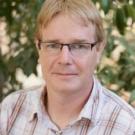
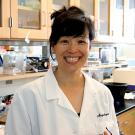
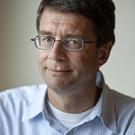
Ben Montpetit

  • Professor
  • Marvin Sands Department Chair
  • Department of Viticulture and Enology -- College of Agriculture and Environmental Sciences
Benjamin Montpetit studies how components of nuclear pore complexes direct and regulate RNA export at a cellular, molecular, and atomic level. Lab members use techniques from cell biology, biochemistry, structural biology, and single molecule imaging with both the budding yeast Saccharomyces cerevisiae and mammalian cell culture models. Ultimately, their research will yield insights into the interplay between nuclear RNA export, gene expression, human biology, and disease.

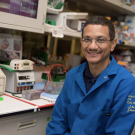
Gerardo Mackenzie

  • Professor
  • Corinne L. Rustici Endowed Chair in Human Nutrition
  • Department of Nutrition -- College of Agriculture and Environmental Sciences
Gerardo MacKenzie studies the role of diet and other lifestyle factors in cancer development and prevention. Current research projects include understanding the cellular and molecular mechanisms involved in the link between obesity, inflammation and cancer; evaluating the role of zinc in pancreatic carcinogenesis; and investigating the use of select nutraceuticals as potential chemopreventive agents.

Angelique Louie

  • Professor
  • Department of Biomedical Engineering -- College of Engineering
Angelique Louie focuses on the application of engineering and physical sciences imaging principles to improve the diagnosis and management of human disease, with an unifying theme of the application of imaging techniques and the design of contrast agents to characterize molecular phenomena in diseased versus normal states.

Susan Lott

  • Associate Professor
  • Department of Evolution and Ecology -- College of Biological Sciences
Susan Lott studies the interplay between development, genetics, and the evolution of developmental phenotypes. Students in her lab combine embryology and genetics with advanced imaging, high-throughput sequencing and computation, primarily in Drosophila as a model system.

Anna La Torre Vila

  • Professor
  • Department of Cell Biology and Human Anatomy -- School of Medicine
Anna LaTorre seeks to decipher the cellular and molecular mechanisms that underlie neuronal progenitor competence and differentiation using a combination of retina cell lines, transgenic mouse models and biochemical approaches. Current projects include examining the role of microRNAs in the dynamic regulation of progenitor competence during retinal histogenesis, mechanisms of cone photoreceptor fate determination, and early eye field formation in development.

Janine LaSalle

  • Professor
  • Department of Medical Microbiology and Immunology -- School of Medicine
Janine LaSalle studies epigenetic mechanisms that act at the interface of genetic and environmental factors in the developing brain, with multiple pioneering studies on neurological diseases and epigenetics.

Ian Korf

  • Professor
  • Department of Molecular and Cellular Biology -- College of Biological Sciences
Ian Korf works in genomics at the interface between biology and quantitative methods. His work has advanced gene prediction, sequence alignment, motif detection, epigenetics, intron function, protein-DNA interactions, ChIP-seq analysis, centromere evolution, DNA repair, high performance computing, RNA processing, and milk biology. Students in the Korf laboratory are co-mentored by experimental molecular biologists so that students get a multi-disciplinary experience that integrates in vivo and in silico biology


Wilsaan Joiner

  • Professor
  • Department of Neurobiology, Physiology, and Behavior -- College of Biological Sciences
  • Department of Neurology -- School of Medicine
Wilsaan Joiner studies how humans use information to aid behavior ranging from visual perception to movement planning and updating. Specifically, he examines how external and internally-generated sensory information is integrated in healthy individuals, in comparison to impaired populations (e.g., people with schizophrenia and upper extremity amputees). Achieving this understanding may lead to better methods for diagnosing and treating impairments of the nervous system.

Wolf-Dietrich Heyer

  • Distinguished Professor
  • Department of Microbiology and Molecular Genetics -- College of Biological Sciences
The Wolf-Dietrich Heyer laboratory studies the mechanism and regulation of recombinational DNA repair. Their studies integrate biophysical, biochemical, cell biological and genetic approaches, with translational studies that aim at harnessing the knowledge of the basic mechanisms of recombinational DNA repair to improve the understanding of cancer etiology and develop novel concepts in anti-tumor therapy.

Aldrin Gomes

  • Professor
  • Department of Neurobiology, Physiology, and Behavior -- College of Biological Sciences
Aldrin Gomes, 2017 Chancellor’s Fellow, examines the molecular mechanisms of signal transduction, particularly in the role of protein homeostasis in cardiovascular disease.  Two main research areas are the role of the proteasome and immunoproteasome in cardiac and skeletal muscles, and the role of troponin in calcium regulation of muscle contraction in cardiomyopathies.