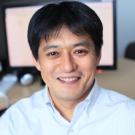
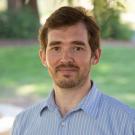
Manuel Navedo

  • Professor
  • Department of Pharmacology -- School of Medicine
Manuel Navedo studies fundamental processes in vascular biology using tools from cellular and molecular biology, quantitative ion-channel physiology, electrophysiology, and imaging. Researchers in the lab seek to understand how local and global calcium signals regulate excitation-contraction coupling and excitation-transcription coupling in muscle cells during physiological and pathological conditions. 

Celina Juliano

  • Associate Professor
  • Department of Molecular and Cellular Biology -- College of Biological Sciences
Hydra, a simple aquatic animal, undergoes continual self-renewal, lacks senescence, and has robust regenerative capabilities; this is accomplished using the same basic molecular toolkit that vertebrates possess. Celina Juliano and her lab seek to understand the molecular mechanisms that underlie these processes in Hydra. By using single cell RNA sequencing technology and collecting thousands of single cell transcriptomes at a single developmental time point, they gain insight into differentiation trajectories and thus obtain an unprecedented view of development. Using this strategy, they are building a molecular map of Hydra homeostatic development.

Jennifer Whistler

  • Professor and Associate Director, Center for Neuroscience
  • Department of Physiology and Membrane Biology -- School of Medicine
The majority of drugs used in human medicine target G protein coupled receptors (GPCRs). The focus in the Whistler laboratory is elucidating how altering the signaling “bias” of a GPCR for its various downstream signaling partners contributes to drug responsiveness and side effects. Dr. Whistler is particularly interested in the role of biased versus balanced GPCR signaling in modulating responsiveness to drugs of abuse and the co-morbidities of anxiety, depression and altered decision making that accompany drug use/abuse. The laboratory has demonstrated the in vivo relevance of altered signaling bias in addiction disorders, and has  extended these studies to other clinically important GPCR targets and their ligands/drugs that are important for the treatment of psychosis, depression, Parkinson’s disease, anxiety, asthma and metabolic disease. 

Karen Zito

  • Professor
  • Department of Neurobiology, Physiology, and Behavior -- College of Biological Sciences
Karen Zito seeks to understand how synaptic connections form during development, and how they are modified by sensory experience and altered in disease. Zito uses imaging techniques in combination with molecular genetic and pharmacological manipulations to probe the cellular and molecular mechanisms that drive the refinement of neural circuits in the mammalian brain.

Mariel Vasquez

  • Professor
  • Department of Microbiology and Molecular Genetics -- College of Biological Sciences
  • Department of Mathematics -- College of Letters and Science
Mariel Vasquez studies the shape and structure of DNA. She examines the mechanisms that underlie site-specific recombination of DNA and the packing of chromosomes in human cells and viral capsids using simulations and knot theory, and chromosomal aberrations using biophysical models and data analysis.

Daniel Starr

  • Professor
  • Department of Molecular and Cellular Biology -- College of Biological Sciences
Daniel Starr studies processes involved in the movement and positioning of nuclei to specific locations within a cell. He and his students use the nematode Caenorhabditis elegans as a model organism to study this basic problem in developmental biology and human disease. They are particularly interested in how nuclei squeeze through constricted spaces, which is a hallmark of many metastatic cancer cells. Starr was named an Allen Distinguished Investigator in 2020.

Sergi Simó

  • Associate Professor
  • Department of Cell Biology and Human Anatomy -- School of Medicine
Sergi Simó seeks to understand how migrating neurons integrate guidance information by regulating signaling pathways to navigate and successfully reach their final destinations. Specifically, he investigates the molecular mechanisms that control neuronal positioning in the neocortex and the cerebellum. He is also interested in the evolution of neuronal progenitor competence during nervous system development.

Lesilee Rose

  • Professor
  • Department of Molecular and Cellular Biology -- College of Biological Sciences
The Lesilee Rose laboratory elucidates the molecular mechanisms of spindle positioning during asymmetric division, using the embryo of the nematode C. elegans as a model system. This research addresses mechanistic questions about basic cell and developmental biology.

Crystal Rogers

  • Associate Professor
  • Department of Anatomy, Physiology, and Cell Biology -- School of Veterinary Medicine
Crystal Rogers studies the molecular mechanisms that control the formation of cranial neural crest cells and the process that neural crest cells use to leave the neural tube and separate from each other. This process occurs in normal embryonic development, but it also occurs in disease states such as tumor transformation and fibrosis. The lab uses both chicken and axolotl as model organisms.

Alex Nord

  • Professor
  • Department of Neurobiology, Physiology, and Behavior -- College of Biological Sciences
Alex Nord explores gene regulatory circuits and chromatin dynamics in the brain, studying how these features contribute to brain development, evolution, and function. His work uses a combination of genomics, mouse- and cell-based models, and human genetics, with both experimental and computational approaches to understand the biological components of human diseases and disorders of the brain.